

Joint Pain
Personalized Care for Pain, Stiffness, and Reduced Mobility
Overview
Understanding Joint Pain
Joint pain is one of the most common reasons people seek care. It can affect any joint in the body — knees, hips, shoulders, hands, wrists, ankles, or spine — and may range from mild stiffness to severe, debilitating discomfort that limits daily activities.
The causes are varied: degenerative changes, autoimmune inflammation, injury, overuse, metabolic conditions, or systemic illness. Because joint pain often involves multiple contributing factors, effective care requires a thorough evaluation and individualized treatment plan.
At Blue Root Health, we address joint pain by identifying the underlying pattern — not just managing symptoms. Our integrative approach combines acupuncture, herbal medicine, and regenerative therapies to reduce pain, support healing, and restore comfortable movement.
Common Symptoms
Recognizing Joint Pain
Joint pain presents differently from person to person. The symptoms below are commonly associated with this condition — though not every patient will experience all of them.
Possible Causes
What May Be Contributing to Your Joint Pain
Joint pain rarely has a single cause. The following factors are commonly involved — and many patients have more than one contributing to their symptoms.
Osteoarthritis
Gradual cartilage breakdown and bone changes that lead to pain, stiffness, and reduced mobility — the most common form of joint disease.
Autoimmune Conditions
Rheumatoid arthritis, psoriatic arthritis, lupus, and other immune-mediated conditions that cause joint inflammation and potential damage.
Injury or Trauma
Previous sprains, fractures, dislocations, or surgical procedures that alter joint mechanics and predispose to chronic pain.
Repetitive Overuse
Occupational, athletic, or habitual movement patterns that place sustained stress on specific joints over time.
Inflammatory or Metabolic Factors
Systemic inflammation, gout, metabolic syndrome, or elevated uric acid that contribute to joint irritation.
Biomechanical Imbalances
Postural asymmetry, muscle imbalances, or altered gait patterns that redistribute load and stress vulnerable joints.
Age-Related Changes
Natural tissue changes including reduced cartilage resilience, decreased synovial fluid production, and altered bone density.
Infection
Septic arthritis — a hot, swollen, severely painful joint with fever — requires urgent medical evaluation and is not treated with integrative care alone.
A Different Framework
The Chinese Medicine Perspective on Joint Pain
In Chinese Medicine, joint pain is often understood through the framework of Bi Syndrome — obstruction of the channels by pathogenic factors such as Wind, Cold, Dampness, or Heat that block the smooth flow of Qi and Blood through the joints.
The character of the pain reveals the pattern: wandering pain suggests Wind; fixed, severe pain relieved by warmth suggests Cold; heavy, swollen joints suggest Dampness; and hot, red, inflamed joints suggest Heat. Many patients present with a combination.
Chronic or recurring joint pain often involves underlying deficiency of the Kidney and Liver systems — which in Chinese Medicine govern the health of bones, tendons, ligaments, and connective tissue.
Treatment is individualized to clear obstruction, restore circulation, nourish the underlying deficiency, and support the body's capacity for joint repair and resilience.

Our Integrative Approach
How We Support Joint Pain
Joint pain requires a personalized approach that considers the type of condition, location, severity, duration, and contributing factors. Our goal is to reduce pain, support joint health, and improve function while complementing appropriate conventional medical care.
Identify the Pattern
We begin by understanding the type of joint involvement, which joints are affected, how symptoms behave, and what factors improve or worsen them — from both a Western and Chinese Medicine perspective.
Reduce Pain and Inflammation
Initial treatment focuses on reducing pain, calming inflammation, and improving joint comfort through individualized acupuncture, herbal medicine, and supportive therapies.
Restore Circulation and Movement
Care is designed to improve blood flow to the joint, reduce stiffness, and support comfortable range of motion — addressing both local obstruction and systemic factors.
Address Underlying Deficiency
When chronic degeneration, constitutional weakness, or systemic imbalance is present, treatment addresses the deeper patterns contributing to joint vulnerability.
Support Regeneration When Appropriate
Regenerative therapies such as Prolozone or Injection Therapy may be considered when ligament, tendon, or cartilage support is clinically indicated.
Maintain Long-Term Joint Health
As symptoms improve, treatment shifts toward maintaining function, supporting resilience, and reducing the frequency and severity of flare-ups.
Therapies We May Recommend
Personalized Treatment for Joint Pain
The therapies below are commonly used in the care of joint pain at Blue Root Health. Not every therapy is appropriate for every patient — your care plan is individualized based on your specific pattern, diagnosis, and goals.

Acupuncture
May help reduce pain, calm inflammation, improve circulation to the joint, regulate the nervous system, and support healthy movement patterns.

Custom Chinese Herbal Medicine
A personalized formula may be recommended to address internal patterns contributing to joint inflammation, stiffness, or degeneration.
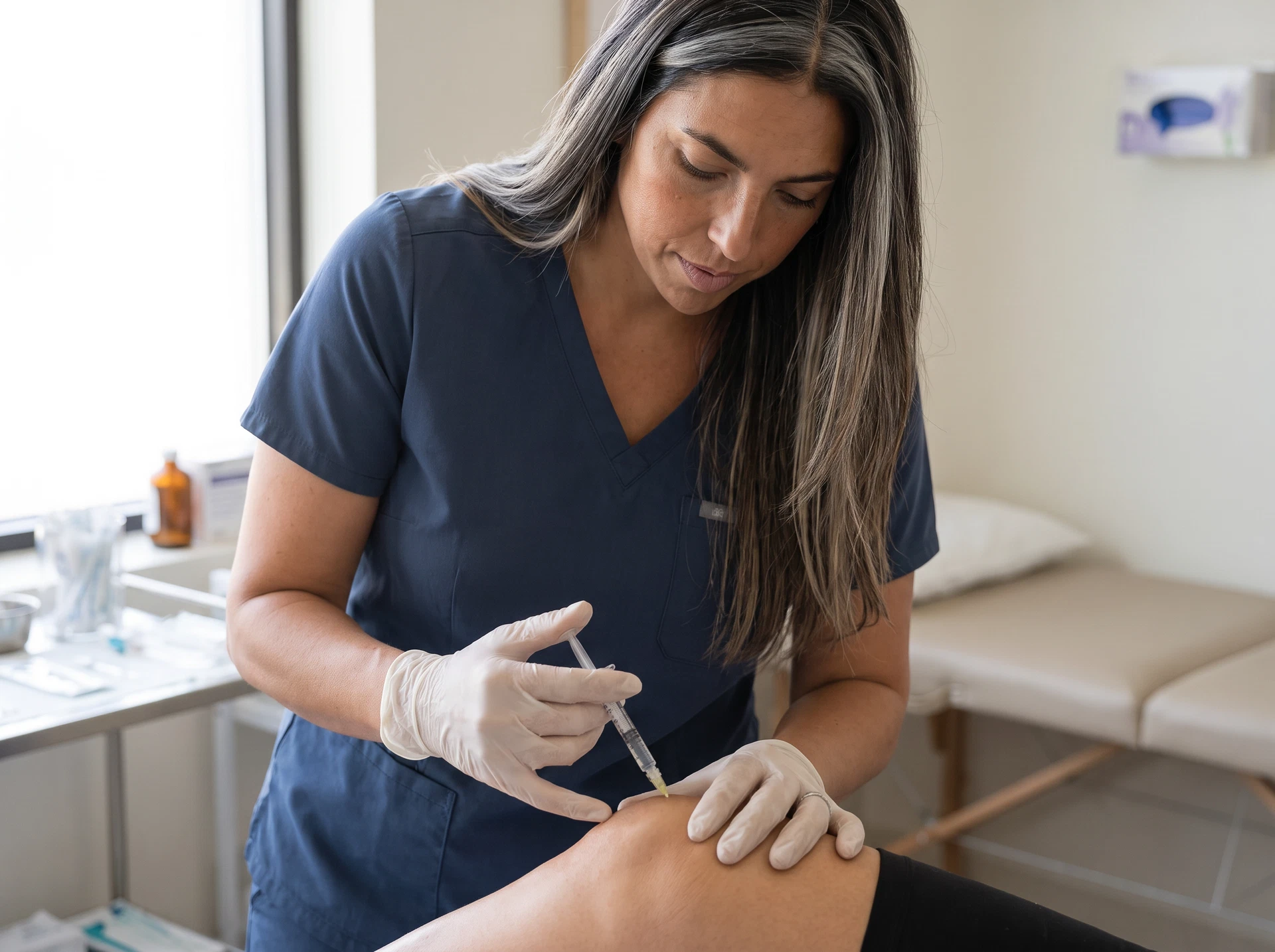
Prolozone Therapy
May be considered when chronic ligament laxity, joint instability, or degenerative changes are contributing to persistent joint pain.

Injection Therapy
Targeted injections may be incorporated when localized joint, ligament, or periarticular tissues require more focused support.

Therapeutic Massage
May help reduce muscular tension around the affected joint, improve circulation, and support comfortable movement.
Frequently Asked Questions
Common Questions About Joint Pain
Related Conditions
You May Also Want to Explore

Begin Your Healing Journey
Ready to Move Without Pain?
Joint pain does not have to define your days. At Blue Root Health, we take time to understand your complete health picture and develop an individualized treatment strategy that supports your body as a whole — addressing the root causes of pain, not just the symptoms.