Cupping & Gua Sha Therapy
Move Freely.
Recover Faster.
Feel the Difference.
Tight muscles, stubborn knots, and restricted movement can make everyday activity feel harder than it should.
Blue Root's 45-60 minute Cupping & Gua Sha session combines therapeutic suction with precise, instrument-assisted bodywork to release muscular tension, encourage circulation, restore mobility, and help painful areas recover.
This is a complete, stand-alone treatment for people who want focused hands-on care and meaningful improvement in how their body feels and moves.
Two Techniques. One Focused Session.
Lift the Pressure.
Release the Tension.
Cupping and Gua Sha work from different directions, which is why they pair so well.
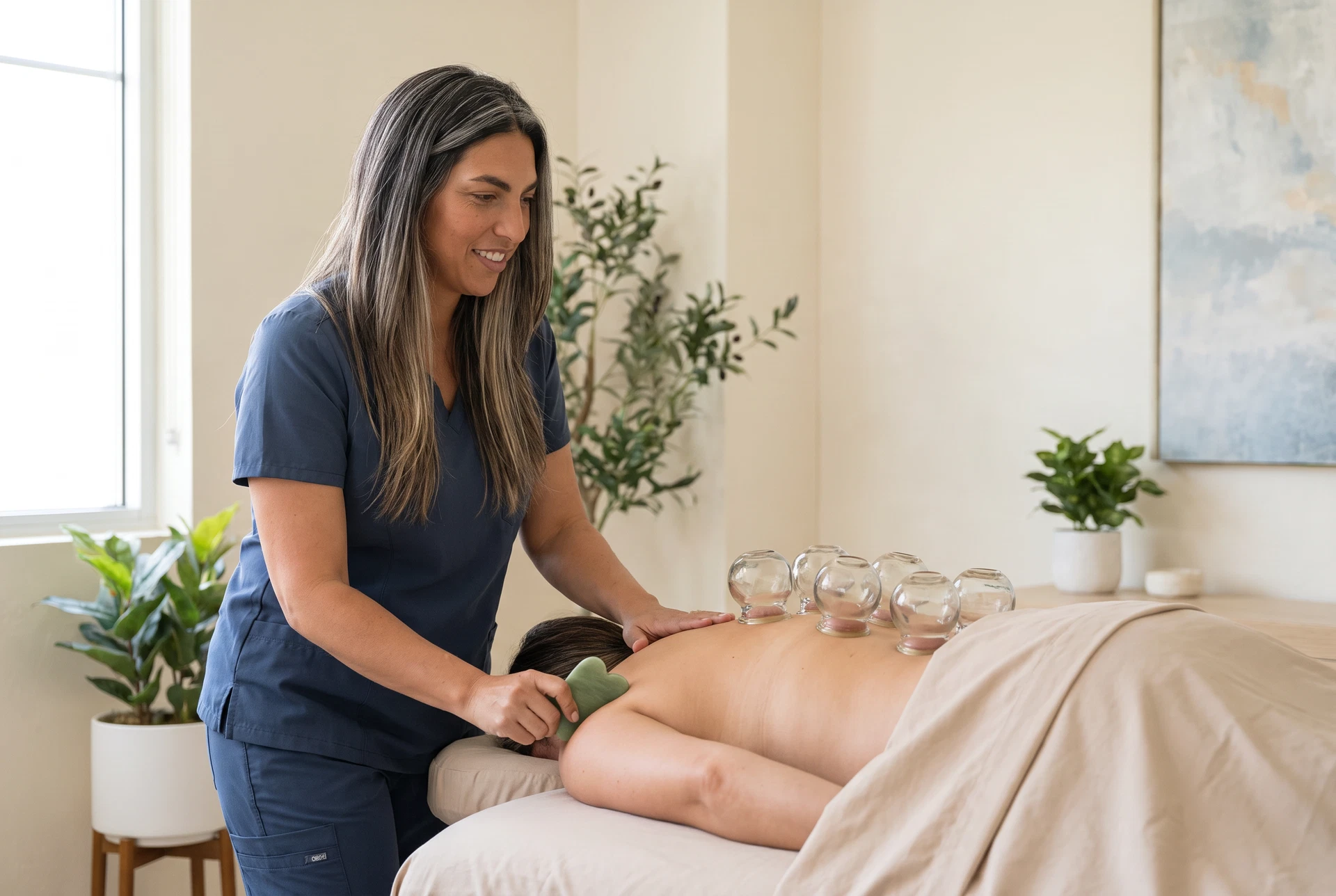
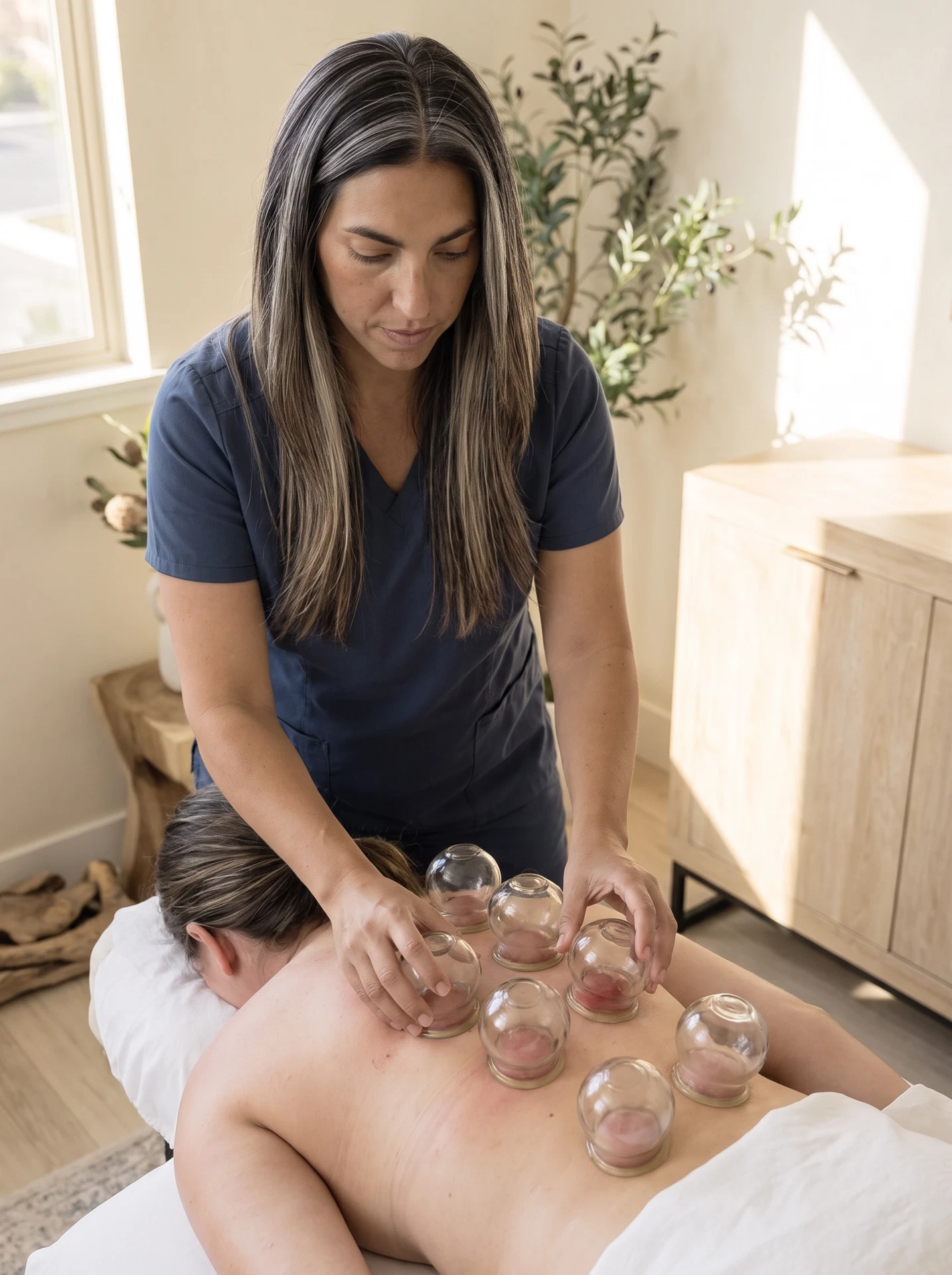
Cupping uses therapeutic suction to lift and decompress tight tissue. Gua Sha uses controlled pressure and movement to mobilize muscles, fascia, and connective tissue. Together, they allow us to address the painful area, the surrounding restrictions, and the compensation patterns that may be keeping the tension in place.
A personalized session can help:
- Release tight muscles and persistent knots
- Reduce soreness and stiffness
- Encourage circulation through the treated area
- Improve flexibility and range of motion
- Support recovery after exercise or physical strain
- Address repetitive-use and postural tension
- Help the body move with greater comfort and ease
Every session is adapted to the location of the discomfort, the condition of the tissue, the patient's sensitivity, and the movement we are working to restore.
Therapeutic Cupping
Decompress Tight Tissue and Restore Flow
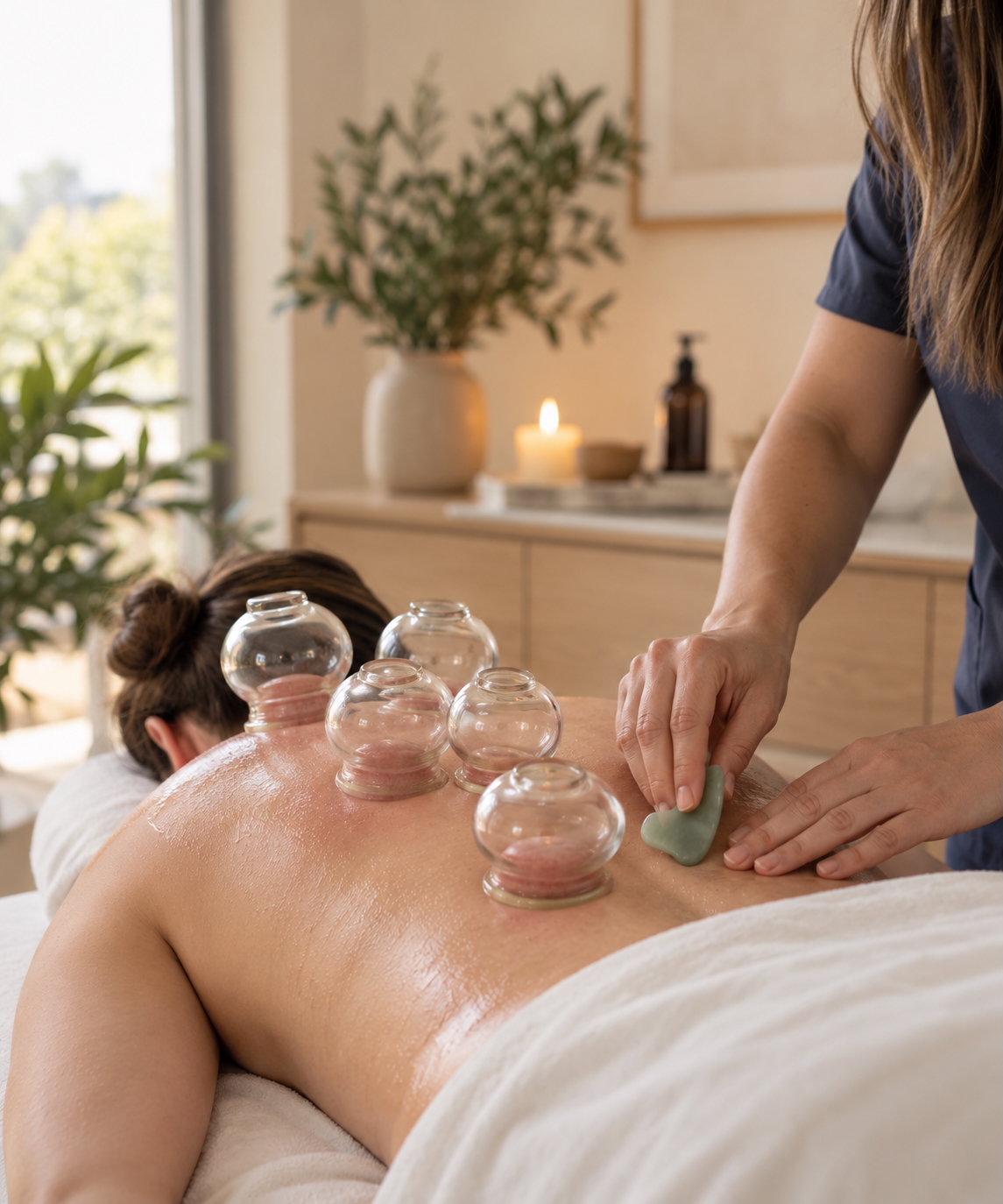
Cupping uses specialized cups to create controlled suction that gently lifts the skin, fascia, and superficial muscle tissue. This lifting action creates space within compressed areas, encourages local circulation, and allows tight tissue to begin softening and releasing.
Depending on the treatment area and goal, the session may include:
- Stationary cupping over concentrated areas of tension
- Moving or sliding cupping across a broader muscular region
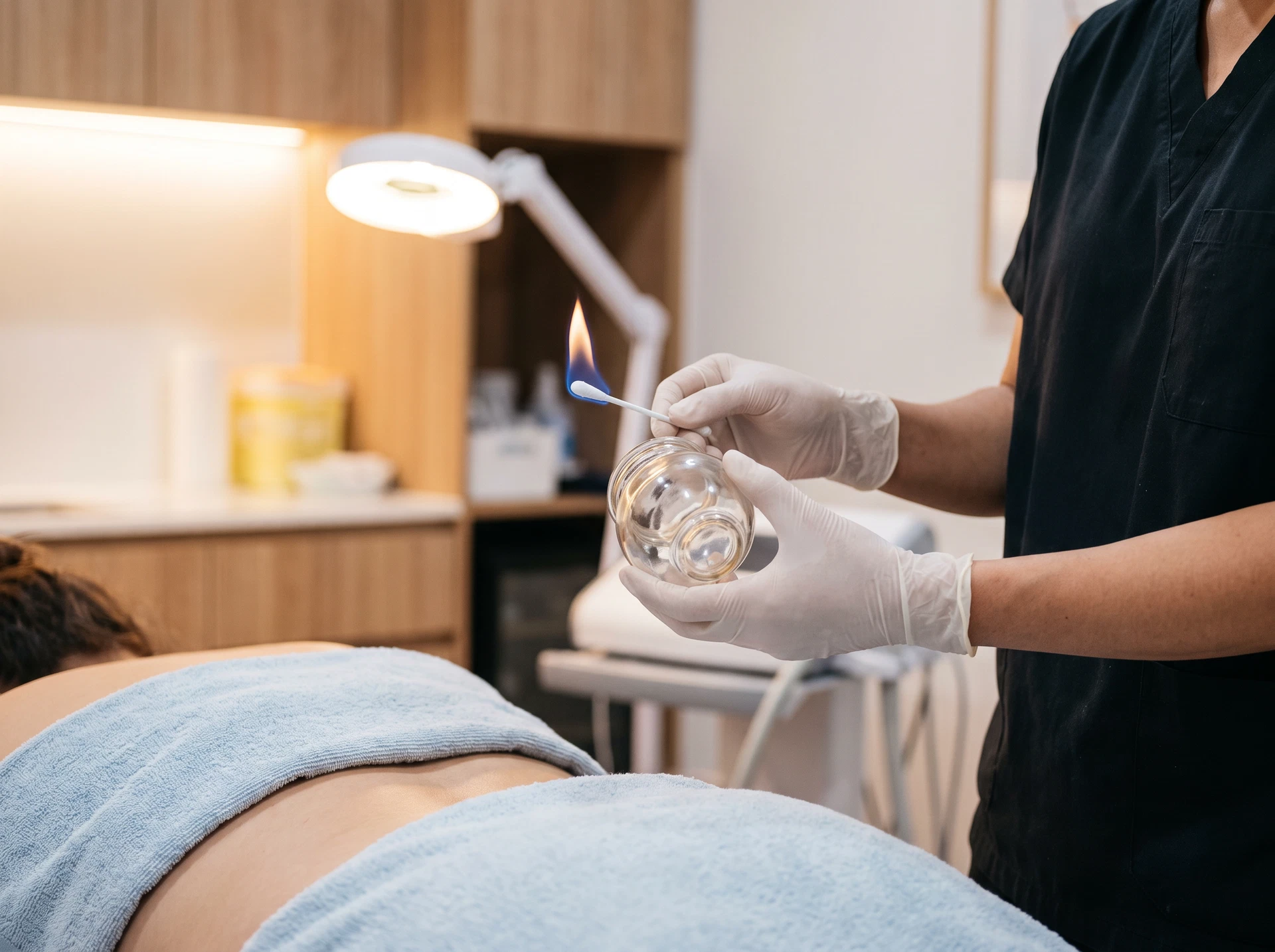
- Fire cupping using traditional glass cups
- Different levels of suction based on the area and patient comfort
Cupping can be especially helpful when muscles feel dense, knotted, heavy, sore, restricted, or resistant to stretching and general massage.
The goal is not simply to place cups where it hurts. We use the cups strategically across the painful area and the surrounding tissues that may be contributing to the restriction.
Clinical Body Gua Sha
Work Through Restrictions
With Precision
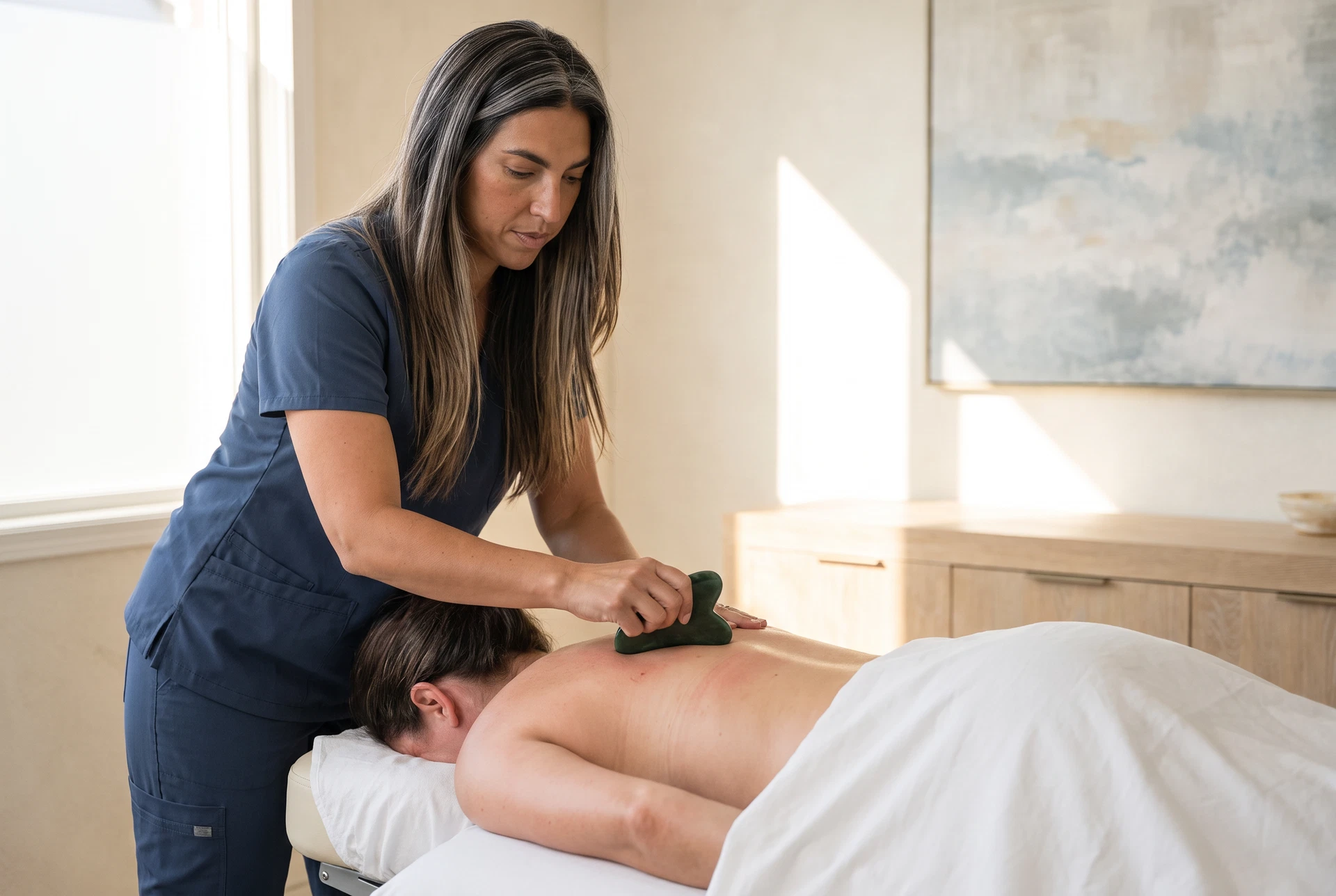
Clinical Gua Sha uses a smooth therapeutic instrument and purposeful strokes to work across tight muscles, fascia, connective tissue, and areas of restricted movement.
The technique helps stimulate circulation, mobilize tissues that are not gliding freely, and release stubborn patterns of tension. It allows the practitioner to work with precision along the neck, shoulders, back, hips, arms, and legs.
Gua Sha can be especially valuable for:
- Rope-like bands of muscular tension
- Persistent knots and tender areas
- Neck and shoulder stiffness
- Repetitive-use tension
- Athletic soreness and overworked muscles
- Areas that feel tight or restricted during movement
This is therapeutic body Gua Sha—not a cosmetic facial treatment. The pressure is continually adjusted according to the treatment area, the condition of the tissue, and the patient's comfort.
Targeted Relief for the Way Your Body Moves
What Cupping & Gua Sha Can Help With
Cupping and Gua Sha can be used throughout the body to address painful, tight, overworked, and restricted tissues. Treatment is selected around the individual pattern—not limited to the place where the discomfort is felt most strongly.
Cupping and Gua Sha can work across the muscles of the upper, middle, and lower back to release tension, improve tissue mobility, and address the surrounding areas contributing to discomfort. Treatment may also include the hips, glutes, shoulders, or sides of the torso when those regions are influencing the back.
These techniques can help release the dense muscular tension that builds across the neck, upper back, shoulders, and shoulder blades. They may be especially useful for discomfort associated with prolonged computer work, driving, stress, posture, repetitive movement, or physical training.
Cupping and Gua Sha can be incorporated into recovery care for sore, overworked, or restricted muscles. Treatment may help improve circulation, reduce post-exercise tightness, restore comfortable movement, and prepare the body to return to activity.
Repeated lifting, typing, gripping, reaching, standing, or performing the same movement can create persistent tension through the forearms, shoulders, back, hips, and legs. Cupping and Gua Sha allow us to work across the full muscular pattern rather than focusing on only one painful point.
When tight muscles and fascia limit comfortable movement, these techniques can help mobilize the affected tissues and improve range of motion. Treatment may be used around the shoulders, neck, back, hips, knees, arms, or legs depending on the restriction.
Some muscular knots return quickly after stretching or massage. Cupping lifts and decompresses the area while Gua Sha provides focused movement through the surrounding tissue, creating a more complete approach to stubborn tension.
Tension through the upper back, shoulders, neck, and jaw can contribute to headaches and a feeling of pressure or restriction. Treatment can be directed toward the muscular patterns involved, helping these areas release and move more comfortably.
Your Treatment Experience
Your 45–60 Minute Cupping & Gua Sha Session
This is a complete, stand-alone treatment. You do not need to receive acupuncture before booking a Cupping & Gua Sha session.
Listen and Assess
We begin by discussing where you feel pain or restriction, how the problem affects your movement, what makes it better or worse, and what you would like to change through treatment.
Identify the Full Pattern
The painful point is not always the only area involved. We assess the surrounding muscles, fascia, movement patterns, and compensation areas to determine where treatment should be focused.
Decompress With Cupping
Cups are placed or moved across selected areas using a therapeutic level of suction. The intensity and technique are adjusted throughout the session according to the tissue and your comfort.
Refine With Gua Sha
A smooth therapeutic instrument is used with controlled strokes across areas that remain tight, tender, or restricted. This allows more precise work through specific muscular and fascial patterns.
Reassess Movement
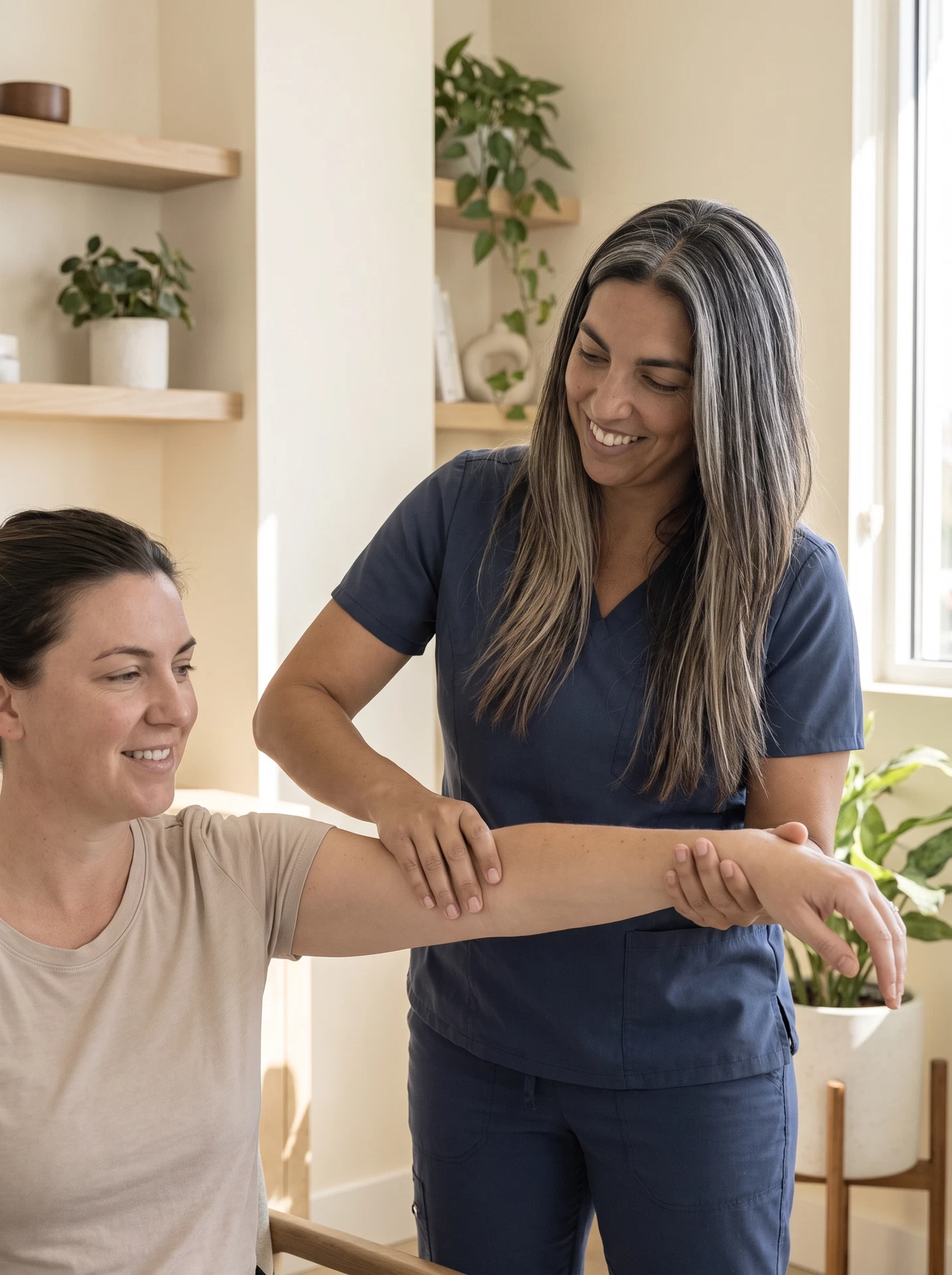
When appropriate, we recheck movement, tenderness, and the primary area of concern so you can feel how the body has responded and receive guidance for the period following treatment.
After Your Session
What You May Feel After Treatment
Many patients leave feeling looser, lighter, and able to move more freely. Treated areas may feel warm, relaxed, or pleasantly worked as circulation and tissue movement change.
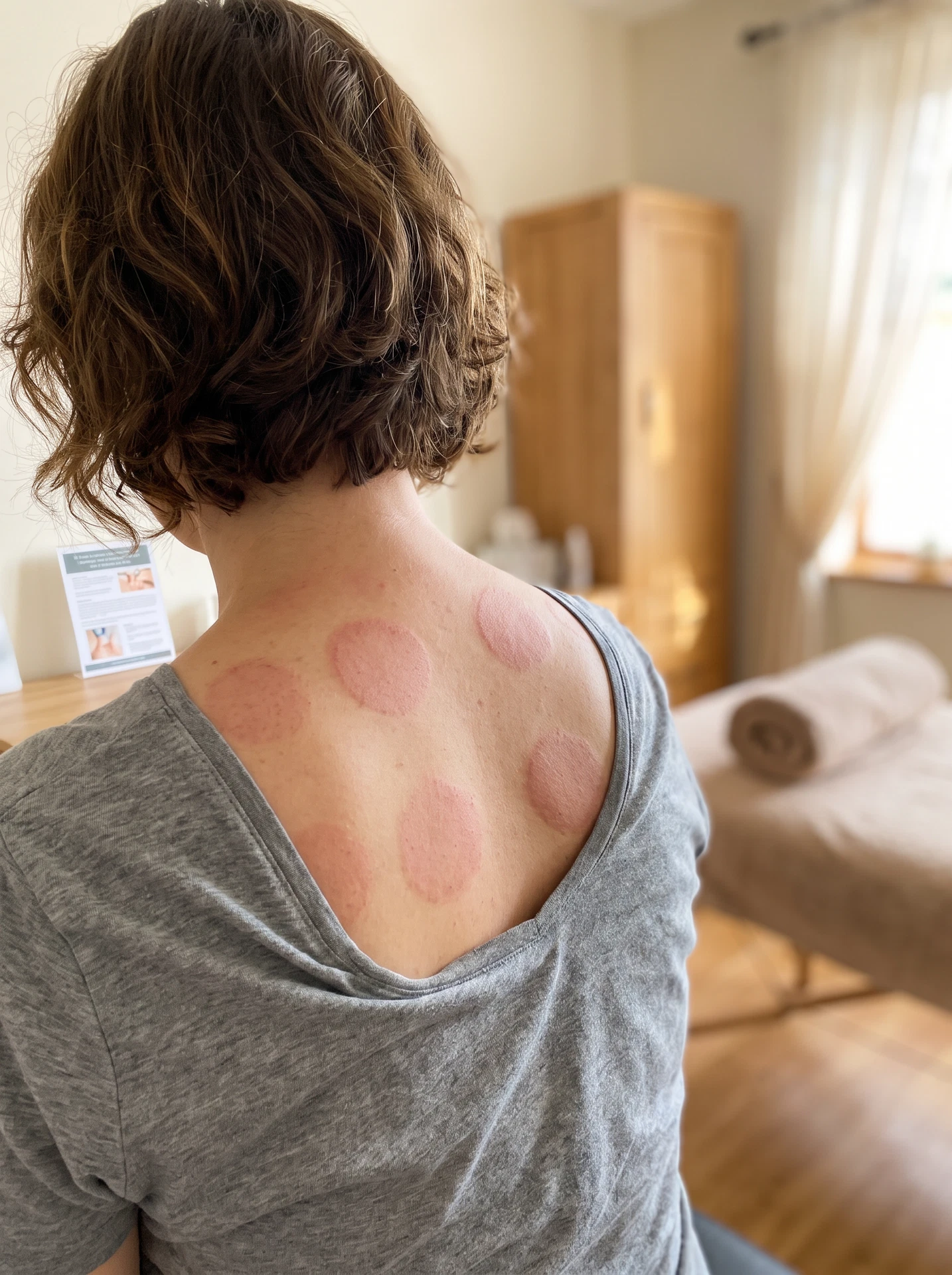
Temporary circular or linear marks are possible after cupping and Gua Sha. Their color and intensity vary according to the technique used and the way the tissue responds. Some marks are light and fade quickly, while others may remain visible for several days.
For the best treatment experience:
- Drink water according to your normal needs
- Keep the treated area comfortably protected
- Avoid aggressive self-massage over the marks
- Follow the activity guidance provided after your session
- Allow the skin to recover before repeating treatment over the same area
Before Your Session
Please let us know before treatment if you are pregnant, take blood-thinning medication, have a bleeding or clotting concern, active skin irritation or infection, open wounds, significant varicose veins, reduced sensation, or a recent surgery, fracture, or injury in the treatment area.
This information helps us select the safest and most comfortable technique for your body and modify the session when needed.
Relief That Can Start Now and Build Over Time
Feel the Change.
Build on the Progress.
Some patients notice meaningful relief, improved movement, or a significant reduction in tension after their first session.
Longstanding or recurring patterns may respond best to a series of treatments, particularly when several muscular regions are involved or the same activities continue placing stress on the body.
Throughout care, we pay attention to:
- Changes in pain and tenderness
- Improvements in flexibility and range of motion
- Whether muscular knots return less quickly
- How the body responds to exercise and daily activity
- How long relief lasts between appointments
- Whether the treatment plan should be adjusted
The goal is not to repeat the same session automatically. It is to build on what is working and help the body maintain greater comfort and freedom of movement.
Frequently Asked Questions
No. Cupping & Gua Sha is available as a complete, stand-alone 45–60 minute treatment. It may also be combined with acupuncture when that approach is appropriate.
Most patients describe cupping as a firm pulling or lifting sensation. The suction should feel therapeutic and manageable, and it can be adjusted at any point during the session.
Clinical Gua Sha feels like focused pressure and repeated movement across a lubricated area of skin. Some regions may feel more tender than others, but the pressure is continually adjusted to your comfort.
Possibly. Cupping may leave circular marks, while Gua Sha may create temporary redness or linear discoloration. Some marks fade quickly, while others may remain visible for several days.
Some patients experience noticeable change after one session. Persistent or recurring tension often benefits from a short series of treatments. We make recommendations according to your response rather than using the same schedule for everyone.
No. Massage primarily compresses and kneads the tissues. Cupping lifts and decompresses them, while Gua Sha uses a specialized instrument to create more focused movement through restricted areas. The techniques can complement massage but provide a distinctly different treatment experience.
No. This service uses clinical body Gua Sha for muscular tension, connective-tissue restriction, soreness, and limited movement. It is different from the light cosmetic technique commonly used on the face.
Gentle movement is often encouraged, but strenuous activity may need to be modified depending on the area treated and the intensity of the session. We will give you individualized guidance before you leave.
Wear comfortable clothing and choose garments that allow the treatment area to be accessed easily. Appropriate draping is provided throughout the session.
Yes. They may be used as a stand-alone service or incorporated into an acupuncture treatment plan when the combination supports the patient's goals.
Focused Cupping & Gua Sha Care Worth Traveling For
Located in Fort Mill, Blue Root Health welcomes patients from Charlotte, Rock Hill, Indian Land, Tega Cay, Lake Wylie, Ballantyne, Pineville, Waxhaw, Matthews, Huntersville, Columbia, and communities throughout North and South Carolina seeking personalized Cupping & Gua Sha therapy.
Move With Greater Comfort
Give Tight, Painful Tissue a Different Kind of Relief
When muscles keep tightening, knots continue returning, or movement remains restricted, the body may need more than stretching and general massage.
Blue Root's Cupping & Gua Sha session combines therapeutic suction, precise tissue work, and individualized treatment to release stubborn tension, restore circulation, and help you move more comfortably.
Book a focused session and experience what changes when the treatment works with the full pattern—not only the place that hurts.