

Pain & Musculoskeletal Health
Carpal Tunnel Syndrome
Personalized Care Supporting Recovery from Wrist and Hand Symptoms
Overview
Understanding Carpal Tunnel Syndrome
Carpal Tunnel Syndrome occurs when the median nerve is compressed as it passes through the carpal tunnel in the wrist. Swelling of surrounding tendon sheaths or thickening of the transverse carpal ligament can narrow the space and irritate the nerve.
Symptoms commonly include numbness, tingling, burning, and pain in the thumb, index, middle, and ring finger, as well as weakness and difficulty with grip. Symptoms are often worse at night or with sustained wrist positions.
Evaluation should consider the severity of nerve involvement, contributing ergonomic and activity factors, and whether proximal issues in the neck or forearm may be contributing to the presentation.
Symptoms
Common Symptoms of Carpal Tunnel Syndrome
Symptoms present differently from person to person. The symptoms below are commonly associated with this condition — though not every patient will experience all of them.
Possible Causes
What May Be Contributing to Your Carpal Tunnel Syndrome
This condition rarely has a single cause. The following factors are commonly involved — and many patients have more than one contributing to their symptoms.
Median Nerve Compression
Pressure on the median nerve within the carpal tunnel from swelling of nearby tendons or thickening of the transverse carpal ligament.
Repetitive Motion & Overuse
Frequent typing, mouse use, gripping, assembly work, or vibrating tools may irritate tissues within the tunnel.
Inflammation (Tenosynovitis)
Inflammation of the tendon sheaths can narrow the space and increase pressure on the nerve.
Wrist Mechanics & Ergonomics
Sustained wrist flexion or extension, poor workstation setup, and awkward tool positioning can contribute to compression.
Previous Injuries
Wrist sprains, fractures, or scar tissue may alter the tunnel’s space and mechanics.
Pregnancy
Fluid retention and hormonal changes may increase tunnel pressure; symptoms often improve postpartum.
Diabetes & Metabolic Factors
Metabolic changes can increase nerve vulnerability and alter tissue health.
Anatomical Variation
Naturally narrower tunnels or structural differences can increase susceptibility.
Proximal Nerve Involvement
Occasionally, issues in the neck or forearm (double-crush phenomenon) may contribute to symptoms in the hand.
A Different Framework
The Chinese Medicine Perspective on Carpal Tunnel Syndrome
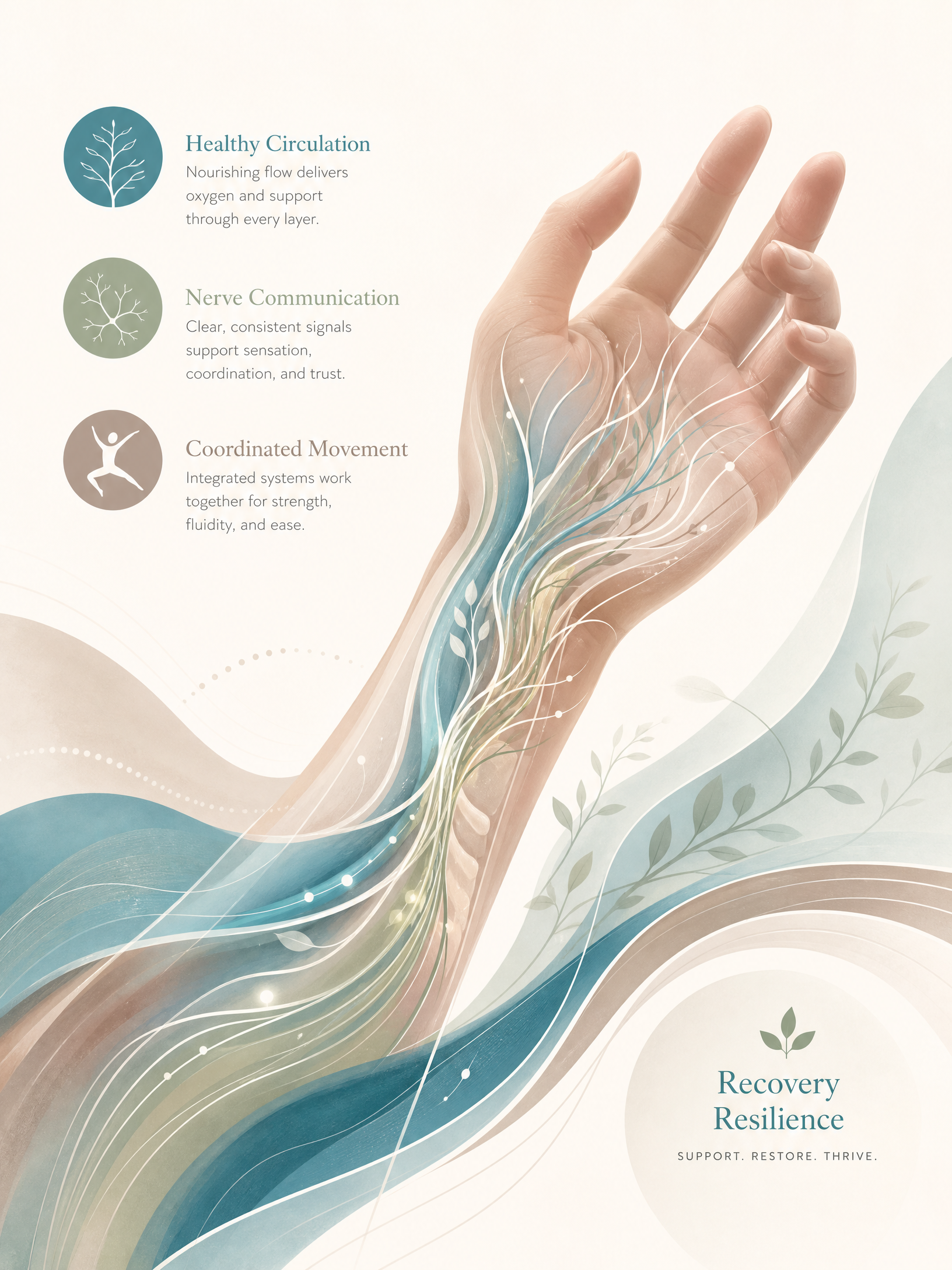
Chinese Medicine views Carpal Tunnel Syndrome as an obstruction of Qi and Blood through the channels supplying the wrist and hand, often involving the Pericardium, Heart, and Lung channels.
Repetitive strain, Cold exposure, and systemic patterns such as Dampness or Blood Deficiency may contribute to the obstruction and nerve irritation.
Treatment focuses on restoring circulation, reducing inflammation, and supporting nerve function through individualized acupuncture and herbal medicine.
Care is individualized to each patient's presentation with the goal of easing obstruction, improving comfort, and supporting the body's capacity to heal.
Our Approach
How Blue Root Health Approaches Carpal Tunnel Syndrome
Carpal Tunnel Syndrome develops through multiple contributing factors — repetitive motion, ergonomics, systemic health, and nerve vulnerability. Our approach is designed to identify what is driving your specific pattern and address it accordingly.
Clarify the Source of Symptoms
We begin by understanding the pattern of numbness, tingling, and pain — and whether the cervical spine, thoracic outlet, or forearm may also be contributing.
Reduce Pain and Paresthesia
Initial treatment focuses on reducing nerve irritation, calming inflammation, and improving comfortable hand and wrist function.
Support Nerve Recovery
When chronic compression or inflammation is present, treatment is directed toward circulation, tissue health, and nerve function.
Address Ergonomic and Activity Factors
Workstation setup, wrist position, activity demands, and nighttime splinting are reviewed and addressed as part of the plan.
Manage Systemic Contributors
Metabolic, hormonal, and inflammatory patterns that may increase nerve vulnerability are considered and integrated into care.
Monitor Progress
We track changes in pain, numbness, grip strength, sleep quality, and daily function to guide ongoing care and determine when referral is appropriate.
Therapies
Therapies We May Recommend for Carpal Tunnel Syndrome
The therapies below are commonly used in the care of Carpal Tunnel Syndrome at Blue Root Health. Not every therapy is appropriate for every patient — your care plan is individualized based on your specific pattern, diagnosis, and goals.

Acupuncture
May help reduce pain, relax muscular tension, improve circulation, regulate the nervous system, and support healthy movement.

Custom Chinese Herbal Medicine
A personalized herbal formula may be recommended when internal patterns such as chronic inflammation, impaired circulation, or persistent tension are contributing.

Injection Therapy
May be incorporated when localized muscles, fascia, ligaments, joints, or irritated tissues require more targeted support.

Therapeutic Massage
May help reduce muscular tension, improve mobility, and support recovery when it is appropriate for the diagnosis and stage of healing.
Frequently Asked Questions
Common Questions About Carpal Tunnel Syndrome
Related Conditions
You May Also Want to Explore

Begin Your Healing Journey
Ready to Restore Comfortable Hand Function?
Carpal Tunnel Syndrome can make even simple daily tasks feel difficult. We will listen to your story, evaluate the factors contributing to your symptoms, and create a personalized plan designed to reduce pain, improve sensation, and restore comfortable hand function.