

Pain & Musculoskeletal Health
Bell's Palsy
Personalized Care Supporting Facial Nerve Recovery
Overview
Understanding Bell's Palsy
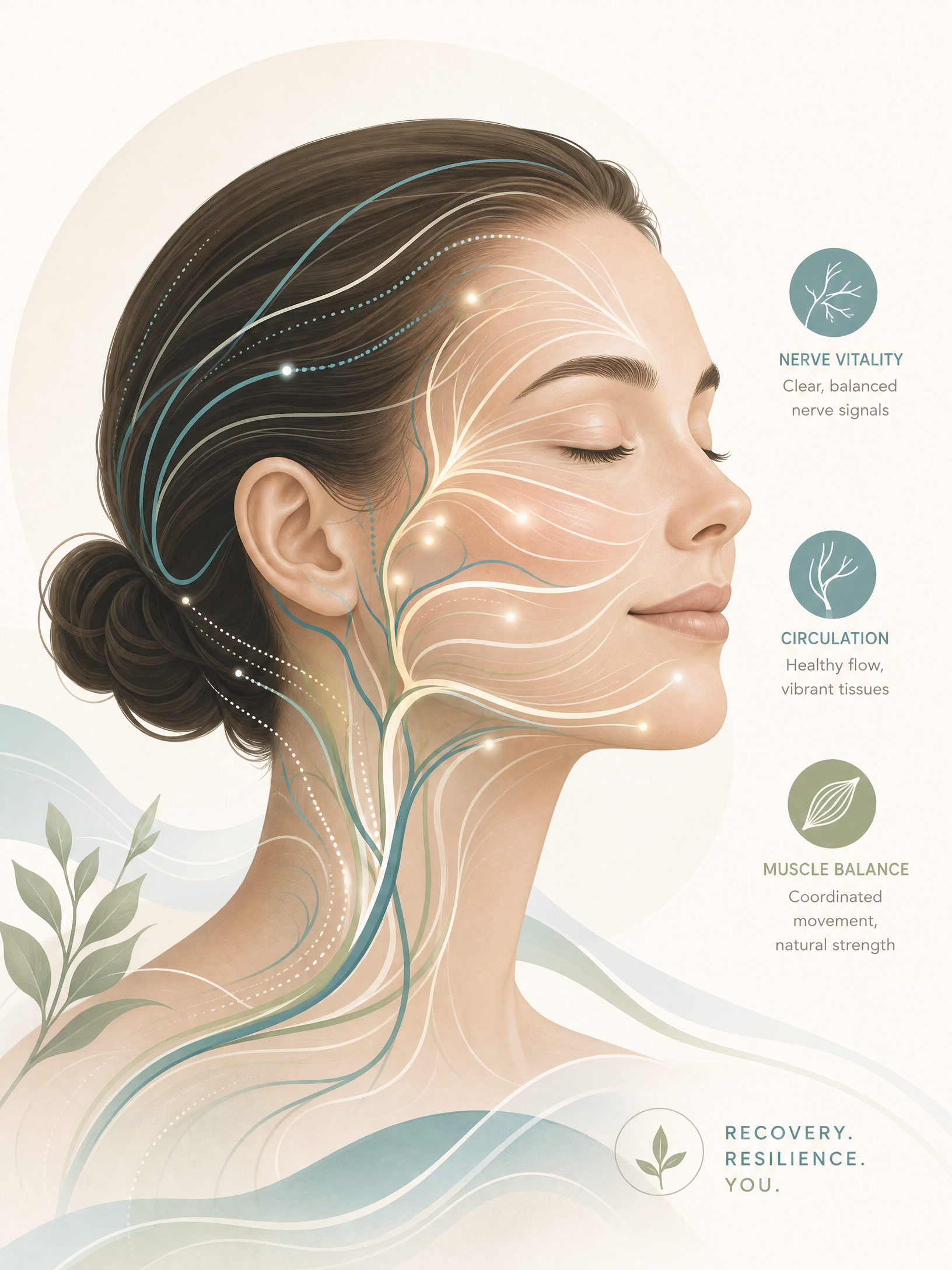
Bell's Palsy is a sudden onset of facial weakness or paralysis caused by inflammation of the facial nerve (cranial nerve VII). It often develops rapidly, sometimes overnight, and can feel frightening.
Recovery differs greatly from person to person. Early supportive care may help optimize recovery while addressing muscular compensation, eye protection, and the underlying inflammatory process.
At Blue Root Health, we provide supportive care designed to promote healthy nerve recovery and improve facial function through personalized integrative treatment that complements appropriate conventional medical care.
Symptoms
Common Symptoms of Bell's Palsy
Symptoms present differently from person to person. The symptoms below are commonly associated with this condition — though not every patient will experience all of them.
Possible Causes
What May Be Contributing to Your Bell's Palsy
This condition rarely has a single cause. The following factors are commonly involved — and many patients have more than one contributing to their symptoms.
Facial Nerve Inflammation
Swelling of the seventh cranial (facial) nerve as it passes through a narrow bony canal may temporarily impair nerve signaling.
Viral Reactivation
Reactivation of certain viruses (such as HSV-1 or VZV) has been associated in some cases of Bell’s palsy.
Immune & Inflammatory Response
An inflammatory response following illness may contribute to temporary nerve dysfunction.
Recent Upper Respiratory Illness
Cold or flu-like symptoms are sometimes reported prior to the onset of facial weakness.
Pregnancy & Postpartum
Higher incidence is observed in late pregnancy and the early postpartum period.
Diabetes & Metabolic Factors
Diabetes or impaired glucose regulation may increase risk in some individuals.
High Blood Pressure
Vascular and inflammatory influences may play a role for certain patients.
Stress & Sleep Disruption
These factors may influence immune and inflammatory processes that affect recovery.
Other Diagnoses to Consider
Facial weakness can occur with other conditions (e.g., Lyme disease, stroke, Ramsay Hunt syndrome). Sudden facial weakness with additional neurologic symptoms should receive urgent medical evaluation.
A Different Framework
The Chinese Medicine Perspective on Bell's Palsy
Chinese Medicine often associates Bell's Palsy with Wind affecting the facial channels — particularly the Stomach and Gallbladder channels that traverse the face.
The sudden onset and unilateral nature of the condition correspond to the Chinese Medicine concept of Wind invading the channels and disrupting the normal flow of Qi and Blood to the facial muscles.
Treatment focuses on restoring healthy circulation while supporting nerve recovery, expelling Wind, and nourishing the facial channels to promote the return of normal function.
Care is individualized based on the stage of recovery, the severity of facial involvement, and the patient's overall constitution and health.
Our Approach
How Blue Root Health Approaches Bell's Palsy
Bell's Palsy recovery requires a careful, stage-appropriate approach that prioritizes eye protection, supports nerve recovery, and addresses the underlying inflammatory process.
Clarify the Pattern and Severity
We begin by understanding the degree of facial involvement, the stage of recovery, and whether eye closure is compromised.
Prioritize Eye Protection
When eye closure is incomplete, protecting the cornea from dryness and injury is the immediate priority.
Reduce Inflammation and Support Circulation
Treatment is directed toward calming the inflammatory process, supporting healthy circulation to the facial nerve, and promoting recovery.
Encourage Balanced Movement
As function returns, care is designed to support coordinated facial movement and reduce the risk of synkinesis (abnormal muscle co-contraction).
Address Contributing Factors
Immune function, stress, sleep, and viral triggers are considered and integrated into the care plan.
Complement Conventional Care
Our integrative approach is designed to work alongside appropriate corticosteroid treatment and medical management, not replace it.
Therapies
Therapies We May Recommend for Bell's Palsy
The therapies below are commonly used in the care of Bell's Palsy at Blue Root Health. Not every therapy is appropriate for every patient — your care plan is individualized based on your specific pattern, diagnosis, and goals.

Acupuncture
May help reduce pain, relax muscular tension, improve circulation, regulate the nervous system, and support healthy movement.

Custom Chinese Herbal Medicine
A personalized herbal formula may be recommended when internal patterns such as chronic inflammation, impaired circulation, or persistent tension are contributing.

Injection Therapy
May be incorporated when localized muscles, fascia, ligaments, joints, or irritated tissues require more targeted support.
Frequently Asked Questions
Common Questions About Bell's Palsy
Related Conditions
You May Also Want to Explore

Begin Your Healing Journey
Let's Support Your Recovery Together
Bell's Palsy recovery is different for every person. Early supportive care may help optimize your recovery. We will listen to your story, evaluate your symptoms, and create a personalized plan designed to support facial nerve recovery and restore comfortable function.